EMT Nurse

Uncategorized
Wishlist Share

About Course

Emergency Medical Technician (EMT) Training for Nurses

Introduction

Emergency Medical Technician (EMT) Training for Nurses is a specialized professional development program designed to strengthen the emergency-response, pre-hospital care, and patient-stabilization competencies of qualified nurses.

Nurses already possess valuable clinical knowledge and experience in patient assessment, vital-sign monitoring, infection prevention, medication management, communication, documentation, and multidisciplinary healthcare delivery. EMT training builds upon this foundation by introducing the principles, techniques, and operational considerations associated with providing emergency medical care outside the traditional hospital environment.

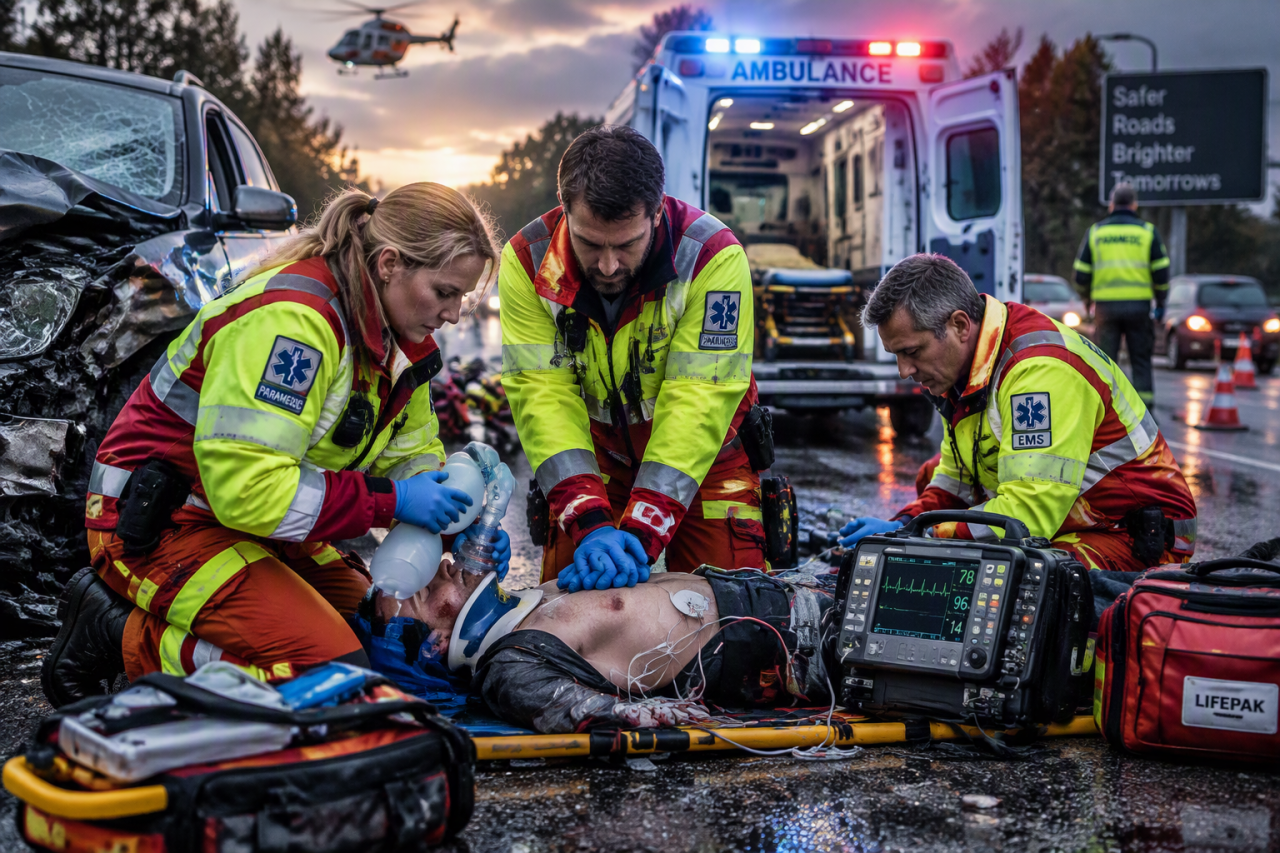
The program focuses on the transition from facility-based nursing care to pre-hospital emergency response, where healthcare professionals may need to assess and stabilize patients in ambulances, workplaces, industrial sites, public locations, remote environments, or other challenging settings.

Participants develop a systematic approach to emergency assessment, recognition of life-threatening conditions, prioritization of care, basic and advanced emergency interventions appropriate to their authorized scope, patient packaging and transportation, and effective handover to receiving healthcare teams.

Show More

What Will You Learn?

  • Training Objectives
  • Upon successful completion of the training, participants should be able to:
  • - Explain the role and responsibilities of an EMT within the emergency medical services system.
  • - Conduct a structured primary and secondary assessment of an emergency patient.
  • - Recognize immediately life-threatening medical and traumatic conditions.
  • - Apply appropriate principles of airway, breathing, and circulation management.
  • - Perform CPR and use an AED in accordance with current approved protocols.
  • - Control life-threatening bleeding and recognize signs of shock.
  • - Assess and provide initial care for common medical emergencies.
  • - Assess and manage patients with traumatic injuries within the applicable scope of practice.
  • - Monitor vital signs and recognize deterioration in a patient's condition.
  • - Apply appropriate patient movement, positioning, lifting, and transportation principles.
  • - Communicate effectively with emergency teams and receiving healthcare professionals.
  • - Perform structured clinical handover and documentation.
  • - Apply infection-prevention, personal-safety, and scene-safety principles.
  • - Demonstrate effective teamwork, communication, situational awareness, and clinical decision-making.